Translate

3/20/2013

The Water Supply Game: Teaching Supply Chain Dynamics to Emirati Students


This past Monday the Student Life Committee of the College of Business (surprise, I am Co-Chair) organised a campus swap for our female students. Professors Claire Sherman, Taiba Hussain, Catherine Budd, Marc Poulin (fellow former U Laval and CIRRELT alumnus)  and myself organised for some of our Abu Dhabi students to visit our Dubai campus.(Now, for my readers in Canada I can explain the Abu Dhabi vs. Dubai feeling as Victoria to Vancouver and Quebec City to Montreal).

It was a lot of fun - and although things did not go exactly as planned, the young ladies met and got to know one another and saw how things are done in the same University, same country, just different campuses. The highlight of the day for me was playing the "water game" with the students. What is the "water game" you ask? Well, let me explain through words and photos (and a link to an academic article only hard core nerds will click on).

So first - water game? Well, the game originated as the Beer Game in MIT in the 1960s to teach supply chain dynamics and the bullwhip effect, the Research Consortium I worked for at Laval adapted the game for the Canadian forest products industry - you can play the game here online (it is super fun, available in French and English and yes, if you email I am sure Phillip Marier will help you out with presentations and the like).

I have played the Wood Supply Game countless times, as a transfer tool with managers, with students, with colleagues, in competition, and just for fun.  and Phillip and I wrote an article about the game in 2004 (yes, I was a nerd even before I got a PhD) - that article is available here.

As obviously the Beer Game is out as a concept, and for that matter the forest products industry is pretty foreign and exotic here - so Marc (an operations professor extraordinaire) decided to adapt the game to the local environment and call it the water game. Using and adapting some great open source material online here is the story of our experiment in learning!

While the students were on the tour, Catherine, Marc and I set up the playing table. I was in charge of photography :)
Marc and Catherine setting up the game
There are four positions per "supply chain" - Factory, Distributor, Wholesaler and Retail. Each "company" has information exchange on the "top sheets of paper"  and goods exchange on the "bottom sheets of paper". Of course, one of the first things we learn when we live supply chain dynamics (e.g. waiting for an out of stock item) is that information and goods travel in different directions and at different speeds!

When the ladies got back from lunch, Marc explained the game. Of course, until we start playing it is hard to conceptualize what to do - so we started week by week, step by step. What ensued was frustration, many laughs, confusion, light bulb moments, and yes, even fun!

Listening to the rules of the game
We named each "supply chain" and ended up playing 6 rounds or weeks. Really the game requires more time, but my goodness I had fun (and I took over the factory position in one sc when two ladies needed to leave).

Arabian nights results

Desert dreams result

Honestly, I cannot remember the team which won - and it is based on inventory (1 dhs) and back order (2 dhs) costs - but really, the game needs to be played for about 30 or 40 rounds for all the information and decisions to work themselves through the system.

Marc compiling results in an excel sheet he had prepared

This was just a first experiment teaching and playing the game here and it would be wonderful to play it in the future with about 4 - 6 hours. Really though, it might have been "harder than the test I took last week" as one student said, to learn the initial dynamics, but the learning curve is steep when we are doing and learning at the same time.

End of the game, certificates and participation gifts!


3/16/2013

Low levels of technology in start-ups in the UAE


This post provides data and a condensed exert from the GEM UAE 2011 Report and is copyrighted material of the authors of the report. It can be downloaded here: UAE 2011 GEM Report If you would like to quote the report or this blog post please use the following details: 

Van Horne, C., Huang, V., and Al Awad, M. 2012. “UAE GEM Report 2011”, Zayed University, UAE


As a researcher in innovation processes I have seen the spark of an initial idea, seen it work its way through research and development, testing through simulation, prototypes, beta testing and then finally on to the final product being used by the end consumer.

In a knowledge economy, technology and the birth of new firms from technology driven innovative ideas and services, need to be nurtured and encouraged. In a small market knowledge economy, innovation and technology are key to increasing exports and the sale of intellectual property.

Using data from 2011 - the UAE GEM Report has found that almost all new business started in the UAE in 2011 have no or low technological levels, with only 2.3% being medium-tech or high-tech new ventures (Figure 1). when figures for Emirati entrepreneurs the figures are even more shocking - 100% of new businesses are no/low tech.

 Level of  technology in UAE start-ups 2011
Perhaps worse is that these figures have not changes since the GEM Report was first published in 2006. In comparison with other innovation-driven economies, the UAE has the second lowest rate of medium technology to high technology established businesses at 2.3% compared to the lowest performing country, Czech Republic at 1.3% and the best performing country, Norway at 14.3%.

As the aerospace and advanced manufacturing industries develop and expand in the UAE this should promote the start-up of high tech small firms. Perhaps targeted initiatives could be developed to promote young people to start up high-tech businesses in their "garages" - perhaps through developing applications, games and other products I am unfamiliar with as a middle-aged professor!

This semester I have a group of male students looking at how "garage based businesses" could be supported in Abu Dhabi - the students are technologically savvy and understand the high-tech needs of their generation. Perhaps they will have some great ideas to increase the technology levels in start-ups in the UAE!


3/01/2013

Characteristics of Female Entrepreneurs in the UAE in 2011


This post provides a condensed exert from the GEM UAE 2011 Report and is copyrighted material of the authors of the report. It can be downloaded here: UAE 2011 GEM Report If you would like to quote the report or this blog post please use the following details: 

Van Horne, C., Huang, V., and Al Awad, M. 2012. “UAE GEM Report 2011”, Zayed University, UAE


Women are regarded as a great resource in the Arab world that has not been tapped to its greatest potential. In the UAE over 60% of university students are women and many have the skills and the desire for independence that owning a business can give to them. 

According to a study by the United Nations, the UAE currently leads the Middle East and North Africa region in women's empowerment. Although significant progress had been made in empowering women (women currently represent 59 per cent of the total work force in the government) and youth from local communities through micro-finance, enterprise development, financial capability training, and youth education; entrepreneurship could serve as a vehicle for women and the young people to take an active role to ensure the country is to realize its milestones of becoming a knowledge based economy with strong social cohesion. 

From the data gathered with the most recent UAE GEM Report we can highlight the following challenges and hopeful signs.


Some challenges:
  • Female entrepreneurs are less likely than their male counterparts to know someone who has started a business in the past two years, and these role models are seen as an important part of the stimulus for budding entrepreneurs to make the leap from opportunity recognition to nascent entrepreneurship. 
  • Female entrepreneurs in general have less prior work experience than men (this is a regional challenge) and therefore have much lower rates of opportunity recognition through past experiences
Some hopeful signs:
  • Early stage female entrepreneurs are much more likely than men to expect job creation in the coming time period, 44.0% compared to 18.2%
  • Of all early stage entrepreneurs, 80% consider themselves just starting out, which would seem to indicate that more women than ever before are making the leap to becoming entrepreneurs.

Table 1: Characteristics of Female Entrepreneurs in the UAE in 2011


Female
Male
Knows someone who started a business in the past 2 years
28.1%
32.3%
Expected Job Growth of Established Business
44.0%
18.2%
Employed by others in Full-time work
39.3%
80.9%
Full-time Homemaker
27.4%
0.3%
Stage of Activity as Nascent Entrepreneurs
80.10%
54.0%
Stage of Activity as Baby Entrepreneurs
19.9%
46.0%
Informal Investors in the Last 3 Years
3.8%
5.2%


I have great hope that increasing numbers of young, middle-aged and even older women in the UAE will become entrepreneurs in the next few years - as an increase in work experience and larger professional networks allow them to more easily recognize and exploit opportunities. Whether through home based businesses or larger ventures the future for women entrepreneurs seems very positive indeed!

2/25/2013

Teaching entrepreneurship to design students: a cool project

I was recently invited by Mr. Marco Sosa (author of the Al Bidiya mosque book I review here) to "act" the part of a client for his ART 385 Interior Design Studio II - today was the initial client meeting. Marco mentioned he is going to start a blog of the project and I asked the young ladies today if I could blog about it - they agreed!

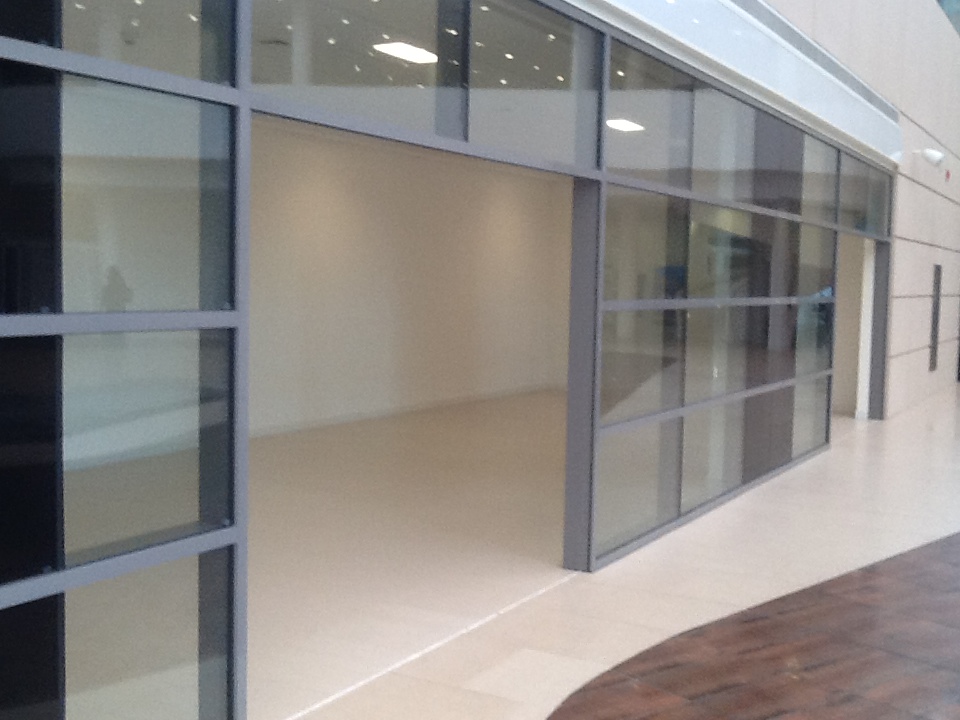
First, the space, is an empty room in the female side of the campus in the "Promenade" - really a great canvas for the young women to be innovative and inventive with.
"Future office space" for fictitious boutique consulting firm
The students mapped it out earlier and then came to meet me and Dr. Victor - the clients. Of course, I came up with a new boutique consulting firm with a client base for training and consultation, from China and Canada wanting to do business in the Emirates and Emirati clients wanting to do business in our respective countries.

The initial meeting was to meet with us, understand our needs and understand who we are. Mr. Marco called it a bit like playing as a "private detective" or an archaeologist discovering needs - because clients (and I was such a good example of this) often don't really know what they want until they see it!

Their questions were amazing and I tried to speak using idioms and purposely did not describe what a "design workshop" was and kept on coming up with new information. It was fun and it made me realize I do miss teaching the girls a lot!

Marco and I and the interior designers 
So, many of them have now followed me on twitter and have my email to ask further questions - really this is such an exciting project. It will also give them first hand experience dealing with a "client" or "clients" rather. True learning through doing... 

I will keep you updated of course! I think the hardest part will be choosing the winning design! I already know I will be blown away by their work!

2/16/2013

Article Snapshot: Business Opportunities in the UAE

This blog post provides an excerpt of an article I wrote for a newly launched online magazine in Canada – Canadian Business Strategist Magazine. You can find the link to the article here: http://thecbsa.org/magazine/2013/02/business-opportunities/  (and if you should want to quote or cite these opinions, please cite the article, not the blog post)

Business Opportunities for Canadian Companies

As both a market in itself, and as a doorway to a larger regional market, the United Arab Emirates is a good place for Canadian entrepreneurs and established businesses to diversify their sales and operations. While the industries the Canadian government has identified are the established and known opportunities, there are many untapped opportunities in health care, adventure and eco-tourism, metals, convenience stores, fashion and food and beverage. Canadian firms have some distinct competitive advantages in these areas which will translate to business success.

Healthcare

The prevalence of obesity and diabetes amongst the Emirati population is very high – which ranks it among the top 10 and top 2 countries in the world respectively. There is universal healthcare provided for Emirati citizens and professional workers are usually provided with heath care from their employers. There are currently heavy investment in the area from well-known American brands such as the Cleveland Clinic and there is a growing demand for more specialised clinics, e.g. for obesity treatment; knee, hip and joint replacement; cardio-vascular and diabetic care. The pharmaceutical industry is also growing much higher than GDP and population – Reuters has estimated an annual growth rate in spending of nearly 10% – and spending in this industry expected to reach over $2.2 billion in 2014.

Adventure and Eco-Tourism

Dubai and Abu Dhabi now run two of the largest and fastest growing airlines in the world with Emirates and Etihad. Aggressive marketing, sales and collaborative projects have increased traffic and tourism in these cities. Millions of passengers transit through Abu Dhabi and Dubai – many taking advantage of short-term visas for shopping and relaxation at the five star luxury hotels. However, there are UNESCO World Heritage sites in Al Ain including sites from the iron age at Hili. Eco-tourism plays a very small role, and yet there are many opportunities in the unique heritage, ecological and cultural sites, as well as mountains, wadis and sand dunes for adventure seeking tourists.

Aluminum SME manufacturers

The UAE is a big player in the aluminum industry and is currently in the top 10 countries in the world, and once production is at full capacity it should take its place as the fifth largest producer after China, Russia, Canada and Australia. Relatively inexpensive electricity, a growing aerospace industry and the role as a regional and international hub provide an environment waiting for experts in aluminum manufacturing to partner with enterprising individuals and groups from the UAE.

Convenience Stores

In the UAE the convenience store industry is dominated by independently run and operated stores. Recent government regulations implemented in 2012 in Abu Dhabi have seen hundreds of these small stores close as they do not meet the new standards. In the capital of Abu Dhabi alone there were over 1,300 small shops in operation in 2012, and with the new standards and new investments needed by small shop owners, the need for future consolidation is evident.

Fashion and Food and Beverage

From the success of brands such as Second Cup and Tim Horton’s in food and beverage and the ever present fashion retail outlets such as Aldo, Spring and Garage – Canadian companies and brands have demonstrated that they have a distinct competitive advantage in the UAE. At the high end of the market, limited edition, unique quality brands are key selling points. In mid-range these same aspects are important – and fashion retailers such as H&M have implemented the “limited edition” clothing lines to great success in the region.

While first mover advantage is an important factor in the UAE – there is still room for established Western brands to make inroads in a market that looks for new, unique, consistent, good quality and fair priced coffee and fast food outlets. While there are some modifications to menus to account for local regulations for halal products, and as delivery is almost a necessity for fast food chains, walking into a Tim Horton’s or a Second Cup is much the same experience in Abu Dhabi or Cold Lake, Alberta.

2/13/2013

Male Youth Entrepreneurship in the UAE: a Research Project


Male Youth Entrepreneurship in the UAE: Questions, Challenges and a Path for Development 

This is an outline of a research project we will be conducting this semester with our research assistant (who will be doing the majority of the work, although we will be there to guide him every step of the way). Yousef will be signing up for wamda where you will be able to follow the progression of the project (posts in English and Arabic). From time to time he will do a guest blog for me as well.

There are many underlying objectives of this project, including creating knowledge in an area which has been under-researched in the UAE and wider MENA region. Of course it is also to say - STOP with the high-paid, fly-in consultants and develop local talent and local knowledge. Also, it is to spread the joy of research to a high-potential student :)

Executive Summary

This internship proposal outlines research to be conducted in the UAE on Male Youth Entrepreneurship, and provide the steps that will need to be taken to gather the relevant information and data required to provide an effective road map to encourage creativity and entrepreneurial activity amongst Emirati male youth.

The supervisory team consists of Constance Van Horne and Victor Huang, two professors of management doing research in the field of innovation and entrepreneurship, and an Emirati research assistant/intern, Yousef Rashed Al Shehhi, a graduating student in the College of Business at Zayed University with a specialization in Human Resource Management, to perform directed secondary and primary research, develop a report with recommendations and prepare a presentation for interested stakeholders.

Purpose of the Research

The UAE is similar to the Arab world in that the majority of the local population is under the age of 24. Although there appears to be an abundance of resources, full and gainful employment of local Emiratis is and will remain to be a challenge in the coming decades. The reluctance of the private sector to hire Emirati youth, coupled with the saturation of government positions by mid-age Emiratis, foreshadows a great need for future entrepreneurial activity – self-employment – by today’s youth.

The challenge is complex, both because youth entrepreneurship in the Arab world in general, and in the UAE in particular, is little understood and the blueprints developed and used in other parts of the world are not suitable for the local cultural, economic, social and environmental context.

According to the data from the Global Entrepreneurship Monitor report in 2011, the vast majority of Emirati early stage entrepreneurs choose to become entrepreneurs due to opportunity recognition and the desire for independence and autonomy, rather than through necessity or economic need. Although there is no current data or research on Emirati youth and the motivations for starting their own businesses, anecdotal evidence from Zayed University students, suggests that they are motivated by passion for their idea or project, a craving for independence and a craving to be well known as a successful business person – a “self-made” success.

Although this seems to be widely “known” and accepted that these are the motivators for Emirati youth, there is almost a complete lack of understanding of how to get from spark – to fully formed idea – to business model development – to financing – to opening the doors for business.

However, an understanding of the motivations and possible incentives is only part of the story. The sustainable economic, social, cultural and environmental needs of the UAE, and its diverse regions, need to be understood to develop “incentives” and guidelines for future Emirati entrepreneurs to follow and be inspired by.

This proposed research will combine field research with local Emirati male youth from across the UAE, combined with an analysis of the strategic plans of the UAE to develop a portrait of the motivators of Emirati youth towards entrepreneurship and a framework of industries, regions and types of small business which should be encouraged. This framework would combine the strategic visions of the nation as well as the stated interests and passions of Emirati youth themselves – what they dream of creating and becoming.


Research tools

The research team will conduct interviews with identified key Emirati young entrepreneurs and Emirati youth advocates. Focus groups of Emirati high school students interested in entrepreneurship will also be conducted (in Fujairah and Abu Dhabi). Interviews with educational, support institutions and parents will also be conducted. This qualitative research will be combined with a review of the longitudinal UAE GEM data from 2006-2011 and an analytical review of the pertinent Strategic Plans of the Nation.

Deliverables 

The deliverables will be a final report to be "published" through i-books, a pilot-lesson plan to motivate young males on the possibilities of entrepreneurship and a formal presentation to interested stakeholders.

2/09/2013

Eco-tourism development in Dibba

This blog post uses the results of two graduation research projects about eco-tourism as a tool for economic development in Dibba. The projects were done by many young men from that region:

Abdullah Obaid Al Shehyari, Ahmed Mohammed Al Hafeeti, Mohammed Rashid Al Shehhi, Majed Ali Al Duhohri, Yousef Rashid Al Shehhi, Ali Salem Al-Zeyyodi, Mohammed Abdullah Al-Yammahi,  Abdullah Ahmed Al-Saridi,  Obaied Rashed Al-Saridi and Jumm’a Betti Al – Ka’bi.

The research project began as a collaborative brainstorming effort. Through many iterations between the team and myself as the supervising professor, the teams came up with the following research problem statement:

Research Problem

The local economy in Dibba is underdeveloped and this causes young people to leave the region for Abu Dhabi and Dubai (Farghali, 2012). One of the possible solutions would be the development of the new industries small and medium firms and human capital development of the local population. These issues could be addressed through the support and development of a locally run eco-tourism industry.
Research questions:

•           How can ecotourism contribute to the economy of Dibba?

•           What could be done to train/ prepare the local population to actively participation in the development and the promotion of our culture and the industry?

•           What could be done for Ecotourism development in the Dibba region through economic and cultural tourism?

The groups then divided the work into two separate categories, tangible and intangible heritage (yes, there is a theme in what “projects” I encourage my students to do!)

A lot of this blogpost is almost directly from their report. They know I am doing this and have agreed that I can use the photos as well. If you would like to learn more about their research, please contact me.

The first step was to understand as much as possible about the concept of Eco-tourism. The students liked the concept, the more they found out about it. Here is a short exert from the report:

“There are several characteristics or principles that describe Ecotourism. These principles started by minimizing the negative impacts that can damage or destroy a destination. In addition, the goal of companies is to educate the traveler on the importance of conservation and emphasise the importance of responsible business that works with local authorities and people to meet the local needs and ensure conservation.  Moreover, the concept stresses the need for planning and sustainable growth of the tourism industry and seeks to ensure that tourism development does not exceed the social and environmental capacity and maximize economic benefits to local communities and increase the percentage of revenues by concentrating on the use of locally-owned facilities and services (Wood, 2002).

Therefore, the idea of Ecotourism helps save the environment besides developing economic activities. Furthermore, it creates understanding of cultural and natural history of the area and improve the welfare of local people. In addition, the use of heritage/green buildings and the development of ecotourism guidelines for local people and potential expat entrepreneurial partners and visitors would help to implement the idea of Ecotourism in the area.”

They go on to write that any development would need to be done through consulting the various stakeholders such as the tourism authorities of Fujairah, Sharjah and the UAE, the municipality of Dibba, the hotel operators, current tourism operators and local people. They suggest guidelines to ensure sustainability – in particular cultural and environmental, and they would love to see more people come for the heritage and cultural attractions not just the (marvelous) beach.
Dibba
They researched and wrote about several areas that could be interesting to develop. The local honey industry (which I have written about), heritage dancing and singing (which I also have written about in this blog), food, fishing and pearling, the local date and fruit farms, and the traditional handicrafts of women (and men in the past who worked on basket and net making).
In the mountains of Dibba
Dibba beach: I obviously took this photo considering its awesome quality!
They wrote of the importance of Al Bidiya Mosque, which is now under consideration as a UNESCO World Heritage Site (I reviewed Marco Sosa’s photographic essay on the mosque in December). They also did research on Wam – an abandoned village that very few tourists know about or visit.
Front cover for Marco's book
From their extensive interviews, primary and secondary research they came up with a very well thought out SWOT analysis.

Strengths
  • UAE is a destination for international and domestic tourists 
  • Certified tourism requirements on entertaining part  and high quality of hotels
  • Well-knit communication and transportation system around the seven emirates
  • Rich cultural heritage with castles, archeological sites such old houses particularly at the north part of UAE
  • Wonderful and clean beaches
·         An attractive place for tourists especially in special occasions

·         Suitable place for many tourism activities 

Weaknesses
  • Government yet to tap skills of locals to run tourism projects
  • Weak marketing strategy used to market tourism products
  • Lack of training courses and exposure visits
  • New business enterprises related to tourism have to go through different restrictive formalities
  • Absence of clear and well defined polices
  • Tourism projects sanctioned without proper understanding of local conditions
  • Lack of community participation in tourism projects
  • Lack of initiative on tourist agencies by making tourism easy for tourists
Opportunities
  • Availability of experts in several areas of tourism
  • Increasing in tourist arrivals
  • New job and income possibilities from tourism
  • Availability of media support
Threats
  • Competing economic activities
  • Increase of misdirected and uncontrolled visitors
  • Transformation from nature-friendly activities to mass tourism

Of course the next step would be to take the results of this project and see if we (meaning the students of course, I love saying we, knowing they have to do all the hard work!) could develop a project this semester to start on the development of eco-tourism guidelines. We will see!
Bravo gentlemen. You worked very well together on a report that is interesting, timely and provides a good starting point for further research.