Translate

2/25/2013

Teaching entrepreneurship to design students: a cool project

I was recently invited by Mr. Marco Sosa (author of the Al Bidiya mosque book I review here) to "act" the part of a client for his ART 385 Interior Design Studio II - today was the initial client meeting. Marco mentioned he is going to start a blog of the project and I asked the young ladies today if I could blog about it - they agreed!

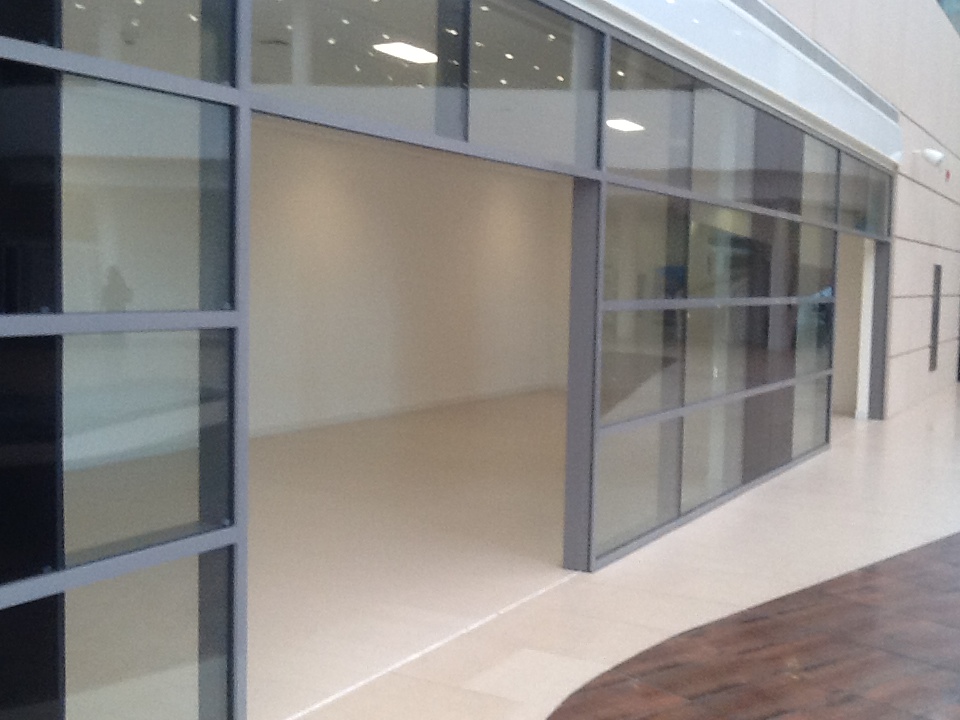
First, the space, is an empty room in the female side of the campus in the "Promenade" - really a great canvas for the young women to be innovative and inventive with.
"Future office space" for fictitious boutique consulting firm
The students mapped it out earlier and then came to meet me and Dr. Victor - the clients. Of course, I came up with a new boutique consulting firm with a client base for training and consultation, from China and Canada wanting to do business in the Emirates and Emirati clients wanting to do business in our respective countries.

The initial meeting was to meet with us, understand our needs and understand who we are. Mr. Marco called it a bit like playing as a "private detective" or an archaeologist discovering needs - because clients (and I was such a good example of this) often don't really know what they want until they see it!

Their questions were amazing and I tried to speak using idioms and purposely did not describe what a "design workshop" was and kept on coming up with new information. It was fun and it made me realize I do miss teaching the girls a lot!

Marco and I and the interior designers 
So, many of them have now followed me on twitter and have my email to ask further questions - really this is such an exciting project. It will also give them first hand experience dealing with a "client" or "clients" rather. True learning through doing... 

I will keep you updated of course! I think the hardest part will be choosing the winning design! I already know I will be blown away by their work!

2/16/2013

Article Snapshot: Business Opportunities in the UAE

This blog post provides an excerpt of an article I wrote for a newly launched online magazine in Canada – Canadian Business Strategist Magazine. You can find the link to the article here: http://thecbsa.org/magazine/2013/02/business-opportunities/  (and if you should want to quote or cite these opinions, please cite the article, not the blog post)

Business Opportunities for Canadian Companies

As both a market in itself, and as a doorway to a larger regional market, the United Arab Emirates is a good place for Canadian entrepreneurs and established businesses to diversify their sales and operations. While the industries the Canadian government has identified are the established and known opportunities, there are many untapped opportunities in health care, adventure and eco-tourism, metals, convenience stores, fashion and food and beverage. Canadian firms have some distinct competitive advantages in these areas which will translate to business success.

Healthcare

The prevalence of obesity and diabetes amongst the Emirati population is very high – which ranks it among the top 10 and top 2 countries in the world respectively. There is universal healthcare provided for Emirati citizens and professional workers are usually provided with heath care from their employers. There are currently heavy investment in the area from well-known American brands such as the Cleveland Clinic and there is a growing demand for more specialised clinics, e.g. for obesity treatment; knee, hip and joint replacement; cardio-vascular and diabetic care. The pharmaceutical industry is also growing much higher than GDP and population – Reuters has estimated an annual growth rate in spending of nearly 10% – and spending in this industry expected to reach over $2.2 billion in 2014.

Adventure and Eco-Tourism

Dubai and Abu Dhabi now run two of the largest and fastest growing airlines in the world with Emirates and Etihad. Aggressive marketing, sales and collaborative projects have increased traffic and tourism in these cities. Millions of passengers transit through Abu Dhabi and Dubai – many taking advantage of short-term visas for shopping and relaxation at the five star luxury hotels. However, there are UNESCO World Heritage sites in Al Ain including sites from the iron age at Hili. Eco-tourism plays a very small role, and yet there are many opportunities in the unique heritage, ecological and cultural sites, as well as mountains, wadis and sand dunes for adventure seeking tourists.

Aluminum SME manufacturers

The UAE is a big player in the aluminum industry and is currently in the top 10 countries in the world, and once production is at full capacity it should take its place as the fifth largest producer after China, Russia, Canada and Australia. Relatively inexpensive electricity, a growing aerospace industry and the role as a regional and international hub provide an environment waiting for experts in aluminum manufacturing to partner with enterprising individuals and groups from the UAE.

Convenience Stores

In the UAE the convenience store industry is dominated by independently run and operated stores. Recent government regulations implemented in 2012 in Abu Dhabi have seen hundreds of these small stores close as they do not meet the new standards. In the capital of Abu Dhabi alone there were over 1,300 small shops in operation in 2012, and with the new standards and new investments needed by small shop owners, the need for future consolidation is evident.

Fashion and Food and Beverage

From the success of brands such as Second Cup and Tim Horton’s in food and beverage and the ever present fashion retail outlets such as Aldo, Spring and Garage – Canadian companies and brands have demonstrated that they have a distinct competitive advantage in the UAE. At the high end of the market, limited edition, unique quality brands are key selling points. In mid-range these same aspects are important – and fashion retailers such as H&M have implemented the “limited edition” clothing lines to great success in the region.

While first mover advantage is an important factor in the UAE – there is still room for established Western brands to make inroads in a market that looks for new, unique, consistent, good quality and fair priced coffee and fast food outlets. While there are some modifications to menus to account for local regulations for halal products, and as delivery is almost a necessity for fast food chains, walking into a Tim Horton’s or a Second Cup is much the same experience in Abu Dhabi or Cold Lake, Alberta.

2/13/2013

Male Youth Entrepreneurship in the UAE: a Research Project


Male Youth Entrepreneurship in the UAE: Questions, Challenges and a Path for Development 

This is an outline of a research project we will be conducting this semester with our research assistant (who will be doing the majority of the work, although we will be there to guide him every step of the way). Yousef will be signing up for wamda where you will be able to follow the progression of the project (posts in English and Arabic). From time to time he will do a guest blog for me as well.

There are many underlying objectives of this project, including creating knowledge in an area which has been under-researched in the UAE and wider MENA region. Of course it is also to say - STOP with the high-paid, fly-in consultants and develop local talent and local knowledge. Also, it is to spread the joy of research to a high-potential student :)

Executive Summary

This internship proposal outlines research to be conducted in the UAE on Male Youth Entrepreneurship, and provide the steps that will need to be taken to gather the relevant information and data required to provide an effective road map to encourage creativity and entrepreneurial activity amongst Emirati male youth.

The supervisory team consists of Constance Van Horne and Victor Huang, two professors of management doing research in the field of innovation and entrepreneurship, and an Emirati research assistant/intern, Yousef Rashed Al Shehhi, a graduating student in the College of Business at Zayed University with a specialization in Human Resource Management, to perform directed secondary and primary research, develop a report with recommendations and prepare a presentation for interested stakeholders.

Purpose of the Research

The UAE is similar to the Arab world in that the majority of the local population is under the age of 24. Although there appears to be an abundance of resources, full and gainful employment of local Emiratis is and will remain to be a challenge in the coming decades. The reluctance of the private sector to hire Emirati youth, coupled with the saturation of government positions by mid-age Emiratis, foreshadows a great need for future entrepreneurial activity – self-employment – by today’s youth.

The challenge is complex, both because youth entrepreneurship in the Arab world in general, and in the UAE in particular, is little understood and the blueprints developed and used in other parts of the world are not suitable for the local cultural, economic, social and environmental context.

According to the data from the Global Entrepreneurship Monitor report in 2011, the vast majority of Emirati early stage entrepreneurs choose to become entrepreneurs due to opportunity recognition and the desire for independence and autonomy, rather than through necessity or economic need. Although there is no current data or research on Emirati youth and the motivations for starting their own businesses, anecdotal evidence from Zayed University students, suggests that they are motivated by passion for their idea or project, a craving for independence and a craving to be well known as a successful business person – a “self-made” success.

Although this seems to be widely “known” and accepted that these are the motivators for Emirati youth, there is almost a complete lack of understanding of how to get from spark – to fully formed idea – to business model development – to financing – to opening the doors for business.

However, an understanding of the motivations and possible incentives is only part of the story. The sustainable economic, social, cultural and environmental needs of the UAE, and its diverse regions, need to be understood to develop “incentives” and guidelines for future Emirati entrepreneurs to follow and be inspired by.

This proposed research will combine field research with local Emirati male youth from across the UAE, combined with an analysis of the strategic plans of the UAE to develop a portrait of the motivators of Emirati youth towards entrepreneurship and a framework of industries, regions and types of small business which should be encouraged. This framework would combine the strategic visions of the nation as well as the stated interests and passions of Emirati youth themselves – what they dream of creating and becoming.


Research tools

The research team will conduct interviews with identified key Emirati young entrepreneurs and Emirati youth advocates. Focus groups of Emirati high school students interested in entrepreneurship will also be conducted (in Fujairah and Abu Dhabi). Interviews with educational, support institutions and parents will also be conducted. This qualitative research will be combined with a review of the longitudinal UAE GEM data from 2006-2011 and an analytical review of the pertinent Strategic Plans of the Nation.

Deliverables 

The deliverables will be a final report to be "published" through i-books, a pilot-lesson plan to motivate young males on the possibilities of entrepreneurship and a formal presentation to interested stakeholders.

2/09/2013

Eco-tourism development in Dibba

This blog post uses the results of two graduation research projects about eco-tourism as a tool for economic development in Dibba. The projects were done by many young men from that region:

Abdullah Obaid Al Shehyari, Ahmed Mohammed Al Hafeeti, Mohammed Rashid Al Shehhi, Majed Ali Al Duhohri, Yousef Rashid Al Shehhi, Ali Salem Al-Zeyyodi, Mohammed Abdullah Al-Yammahi,  Abdullah Ahmed Al-Saridi,  Obaied Rashed Al-Saridi and Jumm’a Betti Al – Ka’bi.

The research project began as a collaborative brainstorming effort. Through many iterations between the team and myself as the supervising professor, the teams came up with the following research problem statement:

Research Problem

The local economy in Dibba is underdeveloped and this causes young people to leave the region for Abu Dhabi and Dubai (Farghali, 2012). One of the possible solutions would be the development of the new industries small and medium firms and human capital development of the local population. These issues could be addressed through the support and development of a locally run eco-tourism industry.
Research questions:

•           How can ecotourism contribute to the economy of Dibba?

•           What could be done to train/ prepare the local population to actively participation in the development and the promotion of our culture and the industry?

•           What could be done for Ecotourism development in the Dibba region through economic and cultural tourism?

The groups then divided the work into two separate categories, tangible and intangible heritage (yes, there is a theme in what “projects” I encourage my students to do!)

A lot of this blogpost is almost directly from their report. They know I am doing this and have agreed that I can use the photos as well. If you would like to learn more about their research, please contact me.

The first step was to understand as much as possible about the concept of Eco-tourism. The students liked the concept, the more they found out about it. Here is a short exert from the report:

“There are several characteristics or principles that describe Ecotourism. These principles started by minimizing the negative impacts that can damage or destroy a destination. In addition, the goal of companies is to educate the traveler on the importance of conservation and emphasise the importance of responsible business that works with local authorities and people to meet the local needs and ensure conservation.  Moreover, the concept stresses the need for planning and sustainable growth of the tourism industry and seeks to ensure that tourism development does not exceed the social and environmental capacity and maximize economic benefits to local communities and increase the percentage of revenues by concentrating on the use of locally-owned facilities and services (Wood, 2002).

Therefore, the idea of Ecotourism helps save the environment besides developing economic activities. Furthermore, it creates understanding of cultural and natural history of the area and improve the welfare of local people. In addition, the use of heritage/green buildings and the development of ecotourism guidelines for local people and potential expat entrepreneurial partners and visitors would help to implement the idea of Ecotourism in the area.”

They go on to write that any development would need to be done through consulting the various stakeholders such as the tourism authorities of Fujairah, Sharjah and the UAE, the municipality of Dibba, the hotel operators, current tourism operators and local people. They suggest guidelines to ensure sustainability – in particular cultural and environmental, and they would love to see more people come for the heritage and cultural attractions not just the (marvelous) beach.
Dibba
They researched and wrote about several areas that could be interesting to develop. The local honey industry (which I have written about), heritage dancing and singing (which I also have written about in this blog), food, fishing and pearling, the local date and fruit farms, and the traditional handicrafts of women (and men in the past who worked on basket and net making).
In the mountains of Dibba
Dibba beach: I obviously took this photo considering its awesome quality!
They wrote of the importance of Al Bidiya Mosque, which is now under consideration as a UNESCO World Heritage Site (I reviewed Marco Sosa’s photographic essay on the mosque in December). They also did research on Wam – an abandoned village that very few tourists know about or visit.
Front cover for Marco's book
From their extensive interviews, primary and secondary research they came up with a very well thought out SWOT analysis.

Strengths
  • UAE is a destination for international and domestic tourists 
  • Certified tourism requirements on entertaining part  and high quality of hotels
  • Well-knit communication and transportation system around the seven emirates
  • Rich cultural heritage with castles, archeological sites such old houses particularly at the north part of UAE
  • Wonderful and clean beaches
·         An attractive place for tourists especially in special occasions

·         Suitable place for many tourism activities 

Weaknesses
  • Government yet to tap skills of locals to run tourism projects
  • Weak marketing strategy used to market tourism products
  • Lack of training courses and exposure visits
  • New business enterprises related to tourism have to go through different restrictive formalities
  • Absence of clear and well defined polices
  • Tourism projects sanctioned without proper understanding of local conditions
  • Lack of community participation in tourism projects
  • Lack of initiative on tourist agencies by making tourism easy for tourists
Opportunities
  • Availability of experts in several areas of tourism
  • Increasing in tourist arrivals
  • New job and income possibilities from tourism
  • Availability of media support
Threats
  • Competing economic activities
  • Increase of misdirected and uncontrolled visitors
  • Transformation from nature-friendly activities to mass tourism

Of course the next step would be to take the results of this project and see if we (meaning the students of course, I love saying we, knowing they have to do all the hard work!) could develop a project this semester to start on the development of eco-tourism guidelines. We will see!
Bravo gentlemen. You worked very well together on a report that is interesting, timely and provides a good starting point for further research.

1/31/2013

Strategy trip to the mountains of RAK


A year ago the young man, Hassan Al Shamala who hosted us so generously in his home, was drowned when a strong wadi swept his car away. Hassan was the first in his family to attend university and his family was very proud that he was a university graduate and an officer in the military. He was greatly loved by all his fellow students, from every Emirate. 

He was also very special to all faculty and staff who learned so much about Emirati culture, from sword dancing to mountain living to an absolute generosity of spirit that still holds the most special memories for me.

Thank you Hassan for the beautiful memories described in this post and the many joyous moments you created for so many of us.

Hassan in his mountains - RAK (Photo by Marco Sosa)


This blogpost was written using first hand research done by the young Emirati men in my BUS 402 Strategy class in Fall 2012. We also took a field trip to the mountains of Ras al-Khaimah (organised by the men) and were hosted by Hasan and his father in their mountain home. On behalf of the class and David Ribott, a Student Life specialist who also came with us, I want to say a very public thank you to Hassan Rashed Bani-Shmeili and his father Mr. Rashed for their hospitality and generosity in sharing their traditions and their family artifacts.

The group projects were all organised around the strategy of heritage - the groups divided into tangible heritage, intangible heritage and cooking. We also had a group visit the Sheikh Zayed Centre in Abu Dhabi (which hopefully I will write about in another blogpost).

However, true heritage cannot be just written about, it needs to be experienced. So the class organised a RAK Day for us to experience what the heritage of the mountains in the UAE really is (in particular the al Shehhi tribe who are originally from the mountains of RAK, Fujairah and into Oman).

We went to the other side of these mountains
Good photo of the road we took
Now, in the UAE the tangible and the intangible get mixed up. For example sword dancing is an intangible tradition that is a specialty of the tribes from mountains and is done in weddings, celebrations, National Day and special occasions. However, the tradition of sword making is also very much a part of the old ways before the discovery of oil and the unification of the seven Emirates in 1971.

Mohammed leaping and Hasan showing why their tribe is known for strength (at National Day celebrations 2010)

Old sword - up close you can see the swirls in the blade
Other tangible heritage or artifacts we don't know a lot about - except what they were used for. For example this pot, we didn't know how old it was, but we know it was used for food.

Old pot
Speaking of food - we ate very traditionally that day and began with a sustaining and delicious harees. It takes hours to prepare and is made with bulgur wheat and lamb (or chicken, I have had both). For lunch we had the lamb and rice meal which you saw in the "Visit to Khaled Hurriyah Restaurant: An Emirati Gourmet Experience" post.

The meals were an example of another important part of the heritage of the UAE - working together for the common good. Take the next photo, in it are young men from four of the seven Emirates (spending the day in  a fifth), preparing breakfast for us all.

Working together from four Emirates
Of course it is intangible heritage that is so hard to capture - I have experienced henna, poetry recitals, cooking, and seen the hair dancing at women's weddings and the sword dancing a few times - but I had never seen (except on video) the yodeling (called nadba) done in the old days to communicate between the mountains and which is now done at weddings and special occasions to welcome guests. I grew up with Dad yodeling so it was quite a treat. I understand now that they welcomed us all... of course at the time it took us back to a time of no phones and where voices needed to carry for safety and even for protecting against invading tribes.

Nadba - Shehhi tribe known for this

We also went for a drive and saw old (really old) abandoned houses made from the stone of the mountain and they explained how people lived and showed me dried fields which used to be filled with grasses in the winter, but for many years there has been little rain. We saw a modern irrigation system being built by Mr. Rashed and older systems for the old houses.

The history of this area of course dates back to before stories were written down - I think the next photo is a fossil, but I don't know for sure.

Fossil
We also spoke about how things have changed and how strategies for tribes, families and individuals have changed. We spoke about entrepreneurial activities that could be developed to create jobs for enterprising young people or retired military personnel - of course we also just soaked it all in and were silent in our own contemplation. The last photo is a photo of me, or a photo of a student looking over the bay far below us. Maybe the best lesson learned on the trip was that developing strategy requires us to know what was, what is and what could be... and it requires contemplation.

1/24/2013

Learning about strategy from Elders: Past lessons can provide tomorrow's solutions

I finally got all the essays back from the Strategy Students - Strategy is... You can read about the assignment here in detail, but basically students had to interview an Emirati older than 60. I chose that age because I wanted students to talk to someone who would remember the differences from pre-UAE (before 1971) and after the UAE came together as a country and the discovery of oil.

The students, from Fujairah, RAK, Al Ain, Hatta, Ajman and Abu Dhabi - chose both women and men, family members and tribal elders, from all strata of society. They all said they were happy to have had a reason to ask questions and to learn about the past... they all learned things they did not know and were reminded of how blessed and easy our lives are today.

A few of the scholars

Of course, as a strategy professor, I look for patterns, for commonalities that could provide me with insight into what "strategy" was in the past - so I can better teach it and do research on it in the future. the reason I used quotation marks is because strategy is not a term that would have been used by their grandparents (or my own) - the strategy was survival through working hard, working together, working with the materials on hand and working for the future.

What were the themes that ran through all the essays? Well the first of course is the deep respect and reverence for the late Sheikh Zayed - who united the country in 1971 and all the ruling families. Another, is the strong role of the mosque and Islam. The mosque in the past was where young boys (and girls) were educated in Arabic, mathematics, geography, and of course religious studies. Education was always seen as an important part of life. Apart from these core fundamentals there were a few themes that stood out for me: equality, transportation, collaboration, economy, and sustainability.

First, I was incredibly proud that many of the essays included significant discussions on the equality of men and women - and that when schools began opening in the UAE after 1971, there were schools for both men and women. This pride came from their elders and was nurtured in these young men.

Second, was how difficult and long transportation was in the past. There were camels, donkeys and horses, but horses could not be used for long distances over the desert. Of course there were boats along the coast, but there were no motors. These modes of transportation were slow, arduous and fraught with danger. Bandits would lay in wait for the caravans traveling between villages and towns and towns and cities. Camels could and did die along the way and the only option would be on foot. Since travel took such a long time, when family came to visit, they stayed for long periods of time. As well, people did not travel alone. There was safety in numbers and also a number of hands were needed for basic survival along the desert journey.

Collaboration was not just used for traveling. Collaboration was the only way to survive the daily effort of providing the food, water, shelter and medical care that were needed. To paraphrase one Elder "the problems of one member of the family, was a problem for the whole family". People worked together, in small and larger groups organized in tribes. People would help one another. This of course would lead to the lessons of life that another Elder mentioned, "Life was difficult before the union, but it taught patience, tolerance and hard work".

This collaboration and tolerance are necessary ingredients of the barter economy which was the economy in much of the UAE. The surpluses of one family were traded for the surpluses or skills from another. One elder women interviewed was widowed early in her married life. She developed herself as an artisan - using palm fronds to weave mats and items. In modern terms I would say that each family or person needed to develop distinct competencies to be an active participant in the economy. Of course the same is true today, although the required skills have changed. Many of the Elders said that the only hard currency came from trade of surplus fish, dates, pearls, produce which were brought by caravan to the cities.

Finally, sustainability. I loved that all essays mentioned that everything was used and shared - palm trees gave a vital source of food, but also material to build houses and also fuel for cooking fires. Rocks from the mountains were used for construction (as it is today) and tools would last generations. Older generations taught younger generations through working alongside and working and learning together.

I know, this is a romanticized vision of the past, but my goal is not historical scholarship - it is finding the patterns that worked in the past, which are still an inherent part of the culture, society and economy. With these patterns we can better understand the present and I can better teach my students - who are the future generation of leaders.

I extend my debt of gratitude to the Elders who shared their stories with my students, knowing they would be shared with me. Also, to my readers, I hope you think a little differently about the past and present here and see a little of the richness of the culture and heritage I experience on a daily basis through my marvelous students.


1/20/2013

Why Entrepreneurs Discontinue Businesses in the UAE


This post provides a condensed exert from the GEM UAE 2011 Report and is copyrighted material of the authors of the report. It can be downloaded here: UAE 2011 GEM Report

If you would like to quote the report or this blogpost please use the following details: 

Van Horne, C., Huang, V., and Al Awad, M. 2012. “UAE GEM Report 2011”, Zayed University, UAE

While most attention is given to entrepreneurs starting businesses, the rate of discontinued businesses is considered as a significant component of entrepreneurial dynamism in an economy. The UAE has a relatively high rate of discontinuation of business amongst innovation-driven economies at 2.2%, but the percentage is even higher among Emirates at 4.5%. Discontinuing a business is not necessarily a negative action on the part of an entrepreneur – it can indicate sale of the business, market forces, starting a new venture or personal reasons. 

In 2011, the reasons given for closing an entrepreneurial venture in the last year was mainly due to the unprofitable nature of the venture at 39.4%, personal reasons at 23.5% and problems raising finance at 19.5%. The underlying rationale behind the reasons of this increase in discontinuation, is not fully captured through GEM data. However, it would be highly valuable to research this trend in further detail, as it may uncover key challenges to be addressed in an effort to further increase the chances of success of the smaller enterprise.

However, this high percentage of individuals indicating financial reasons for ending a business would seem to suggest a strong need for funding support mechanisms along the entrepreneurial process – from nascent entrepreneurs gathering the necessary resources to begin their business, to “baby business” owners striving to achieve competitive advantage, to more established businesses finding themselves needing to grow to survive. Starting one’s own company in the midst of an economic downturn may seem, to many, like a bad idea. Lenders are cautious, businesses conservative and consumers are on the defensive, which create less than ideal market conditions for young enterprises.

 Table 1: Reasons given by entrepreneurs for discontinuing operations


Opportunity to sell
Non profitable
Problems Raising finance
Another job/business opportunity
Exit planned in advance
Retirement
Personal reasons
Incident
Other
2006
0.0%
0.0%
0.0%
0.0%
0.0%
0.0%
0.0%
0.0%
0.0%
2007
3.0%
18.1%
12.5%
17.4%
12.8%
2.0%
26.9%
7.2%
0.0%
2009
9.7%
22.0%
21.1%
20.9%
1.7%
0.0%
22.7%
1.9%
0.0%
2011
6.2%
39.4%
19.5%
2.6%
6.1%
2.3%
23.5%
0.2%
0.0%