Translate

11/13/2013

The Most Awesome Azba in Al Ain: innovation, sustainability and profit all in one!

Before the Falcon Azba we went to a farm - the farm of Abdullah's cousin - and it was a farm unlike any I had been too.... this will be a very photo intensive post as everywhere we turned there was another innovative idea or invention to absorb... above all it was CLEAN, and it didn't smell (although there were so many animals) and the animals were the healthiest and cleanest ones I think I have ever seen on any farm anywhere.

I am itching to have the time to do an academic case study... this farm is a model in sustainability and ingenuity... OK, enough gushing and let the photos tell our story :)

We left at the start of class time (no other classes were missed!)

On the road to Al Ain

Convoy... 

Arriving at the azba, as always we are greeted with Emirati hospitality, which means water, gawa and dates

First day with my phone! I am now embedded in the phone culture here!

Yasser and Abdullah explaining the day and the vision, strategy, objectives and tactics of the farm... they had spent the previous Friday with Abdullah's cousins and had so many notes and information - super proud of them!
There are four parts to the farm - birds, animals, vegetables and "relaxing" - here are some newly hatched laying chickens

This is a newly hatched bird that are raised to sell as birds - Emiratis seem to love birds and every azba I have visited has a huge bird house...

Bird hospital where sick birds are taken care of

Bird breeding with "married" birds raising babies together! (there are some mixed breeding experiments going on too)
 
Mom and Dad protecting their egg!


Clean, happy and healthy chickens!

Super interesting... this mom and dad are "common" birds - and by switching eggs laid on the same day by "rare" birds, the common birds will raise the rare babies...
tons of birds, some common, some rare one third for sale :)

The water pump and filter he invented himself (Abdullah's cousin LOVES the internet) - he invented it because sooooo many people try to rip him off... and it cost him 1/4 what the sales people quoted and works 100x better!

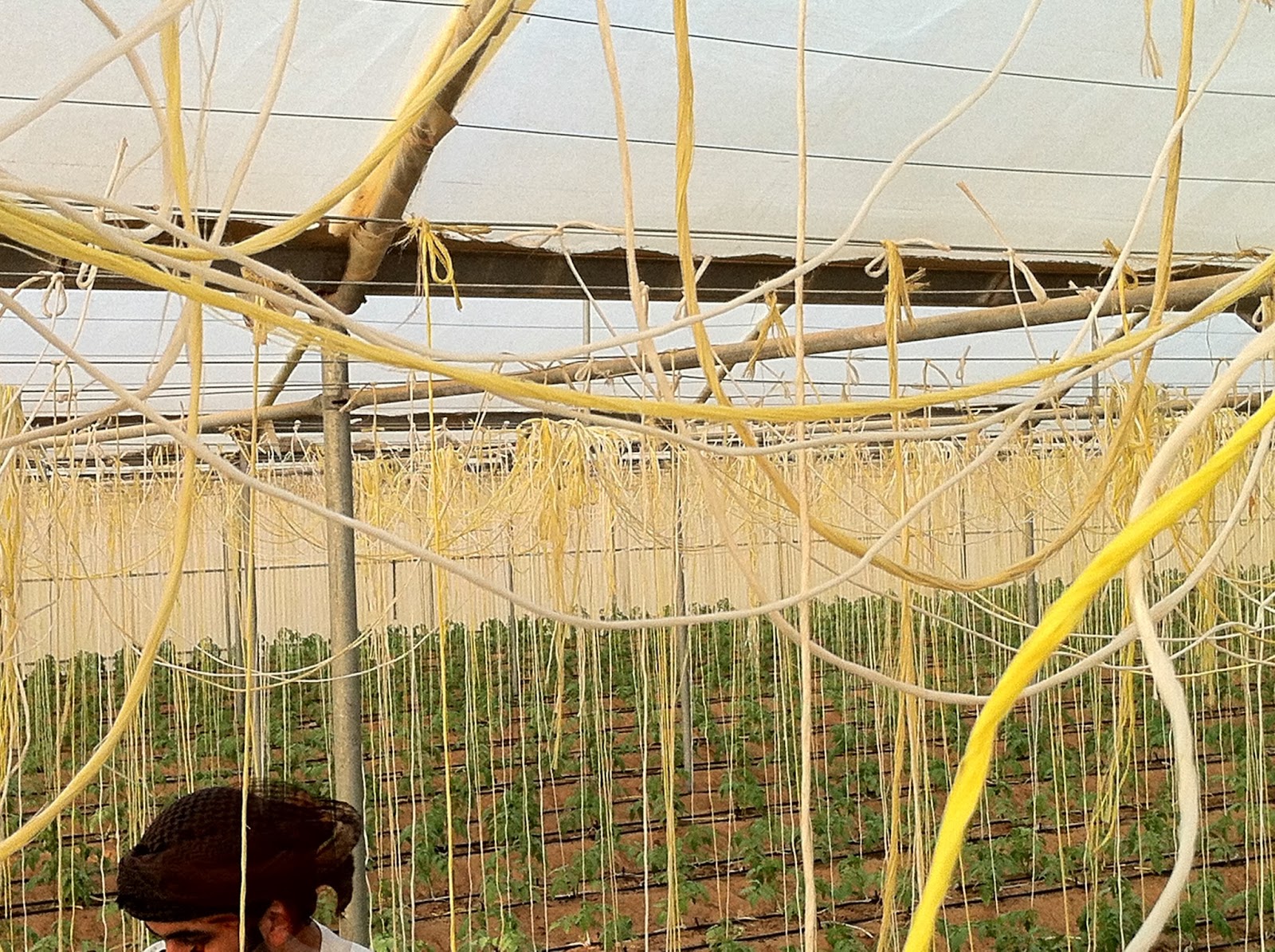
There are 14 bought greenhouses...

300 plants per row - we saw tomatoes and hot peppers

Everyone was super impressed!

The Jordanian engineer who has been working at the farm for 11 years... he was respectful, informative and SMART (m'ashallah)

Irrigation system 
Abdullah answering one of my 100+ questions!

In the winter greenhouse designed and built by Abdullah's cousins and his farm workers

Pregnant camel!

Yes gentlemen, I am not just "book" smart :) I could survive in another occupation if I had to!

The fruits of my labour :)

Expensive sheep - still lots left after Eid to make babies for next year!

the daddy to a lot of the babies on the farm!
more lovely sheep!

The small desalinator... he desalinates his own water for the farm and uses the sweet water for the plants and animals and the salty water for the date trees (something I learned, date trees can use salty water!)

There are two desalinators

Bigger tomato plants, the smell was wonderful!

Showing Nawwaf that you need to trim the "suckers" so more plant energy goes to the fruit... yes, the engineer told Abdullah he was shocked I knew that :) 


Most of the class... yes, I look like a proud Mom I know!!!!

This was simply an amazing farm... and one of the greatest things I hears was when Abdullah told me about asking his cousin about the vision of his farm... 

"Cousin, will you ever reach your vision to have the most innovative farm using sustainable methods and growing and raising food for the UAE?"

"No, I will never attain my vision, but it is my greatest joy working to reach it"

Of course, I talk about this in class... but to hear it from someone living and see it in action is the greatest lesson my students can learn. Of course I did a little fist pump when I heard and might have said "I told you so".... but the lesson was learned by all.

A million thanks from me to all of you who planned, organised, kept us on schedule and made the day a truly memorable one!

Falcon Quest: a falcon azba in Al AIn

There is a strong tradition and long history of falcon hunting in the UAE and the larger region. I have held falcons at different times and seen them hunting in old videos... but have never been to a working falcon farm - of course, given my tremendous luck as a professor here - last month our strategy class went to such a farm.

We went to the farm around 8... at the end of a long afternoon of Al Ain adventures (the first INCREDIBLE azba story will follow this one).

I will let the photos do the talking... It really was a strong lesson in the efforts made by individual families to keep tradition alive through modern methods and a strong love of their culture.

Khalid explaining the new methods used to train falcons - in the past it was just releasing birds, then small hot air balloons were used and now small guided aircraft are used to get very high and very precise (so the bird doesn't gt lost!)

Everyone was fascinated and asked loads of questions - many hadn't been to a falcon farm before - we also heard about a new falcon competition sponsored by Sheikh Khalifa (the President of the UAE) to keep the tradition alive and ensure it is passed on to younger generations 
Really cool to have all the falcons behind us

Heading to the long and huge barn that holds the falcons... it is 800 metres long and there are huge fans for cooling and at then end there is an air conditioned "room" for the falcons from colder climates to go to (I may have picked up a few feathers)

A gift of a feather to me :)

Khalid placing the falcon on my hand (yes I have 2 feathers in my hair)

Walid from RAK who had also never been to a falcon azba 
Beautiful bird - she is called heart for the heart shaped markings on her back

A dinner hosted by Abdullah's family and Khalid's family - it was delicious

It was a great way to end an amazing day... keeping tradition alive is as much about the future of the UAE or the "modern" UAE as it is a thing of the past. While hunting is almost exclusively done in other countries - the training and use of these falcons is very much a concern for many families in the country. We were all grateful to get a glimpse of the vision of this azba and the constant stream of innovative methods being used for training... Thank you Khalid (and your family and team of course) for organizing this!

The strategy of soccer (football) in the UAE: Field trip to Fifa U17 match Brazil vs. UAE

Last month my Strategy class went on a trip to the UAE vs. Brazil Fifa U17 football match... the assignment was to attend and pick one aspect of the event to write about... they had to look at the "strategic" aspect of something and analysis it...

There were three main areas I suggested they look to:


  1. Why the UAE holds such events?
  2. Running the event itself (e.g. the marketing, the free tickets, the security, etc.)
  3. The actually match itself (yes, a classic underdog vs. titan)
Of course I got great answers... 

There are a few main reasons the students said the UAE holds these events:
  • To promote fitness and world class soccer (football) among Emiratis (with the hope of course to inspire youth to take up fitness and also train hard to make it to the top rungs)
  • To put the UAE on a world stage and prove that events held here are well run and above all safe for spectators, players and the general population
  • With the event held in several Emirates, it was to bring world class events to places that don't often see them (e.g. Fujairah and RAK)
The event itself was seen in different, genrally positive, lights:
  • They felt the marketing in Dubai, Fujairah, Sharjah and RAK was well done... and the games were well attended (anecdotal evidence)... but that maybe more effort could have been made in AD... or perhaps different "tactics" used... 
  • They appreciated the safety and security of the event - and know that this is one of the "core competencies" of the country - we feel and are safe in a region not known for safety!
  • They understood that the tickets were made free so that anyone who wanted to go could go... again, a benefit of living here is that "normal" people do have access to events they would not have access to at "home" ... (parking was free too and I know a lot of expat families made a family trip of the games)

The game...

  • OK, many students were not keen on going due to the fact that well, the UAE team was bound to lose... Brazilians don't drink milk from their mothers, they drink and eat football from birth :) (e.g. the game was rigged from before the players stepped foot on the field!)
  • Many looked at it from the position that the goal of the game was not so much to win, but not to lose badly... I got a few game diagrams and descriptions of tactics that tried to explain these things to me... 
  • The team did better than the last time... they at least scored a goal!!!!! (Final score 6 - 1)
But we enjoyed it... it cost no money for anyone... and I got to see a few alumni that came along ... but most important they thought about strategy, tactics and operationalisation of goals... and that is always a good thing!

8,000 tickets "sold"

Mr. Khalid, the number 1 UAE football fan! Remember I ate at his restaurant :)

Mansour, me and Mr. Khalid

A few of the students :)

A few more...

And a few more!


10/31/2013

Sir Bani Yas Operations Management field trip (a blog post by photos)

This past Saturday I was the second chaperon for the Sir Bani Yas field trip (I paid my own way those who think professors are spoiled here!). I have been wanting to go for over four years - so it was kind of like a dream come true!

Dr. Batoul and students in her Operations Management organised the trip - and yes, it is possible to get students to come on the weekend!

Sir Bani Yas Island is a project that was start over 40 years ago by Sheikh Zayed as a nature reserve - and there is now a wonderful hotel that you can stay at and go on safaris to see the animals, archery and many other activities (which we didn't do so I can't comment on).

Here is the wikipedia link: http://en.wikipedia.org/wiki/Sir_Bani_Yas

It was quite amazing... and I will let my photos do the talking!

We arrive after a longish drive... past the turnoff for Liwa... this is our "ferry"
On the bus - I am sure the few tourists who were with us were wondering "what the heck?"
Flamingos on the ride to the hotel - I think they are prettier, was told by one student that "they are prettier on the plate Miss" (there is strictly no hunting on this island of course)

Group photo with Dr. Batoul
Our half the group ready to go on the safari!


Giraffes! A gift from Kenya to Sheikh Zayed
 
I think this one is called Reem...

Mahas and other "Dhabs" relaxing in the shade
 
A very cool thing to see!

After lunch we arrive to practice some archery 

The boys do well

I do better of course :) (I will never say if that sign means 10 feet or 10 metres!)

10/25/2013

Article snapshot: The Cooperation Complexity Rainbow: Challenges of Stakeholder Involvement in Managing Multinational Firms

Another article snapshot... this time I came into the research process at a later stage and as the fourth author cannot take credit for much :) The credit goes to:
  • Salman Kimiagari, PhD candidate in Enterprise Engineering 
  • Samira Keivanpour, PhD Candidate in Industrial Engineering 
  • Muhammad Mohiuddin, PhD (ABD) in International Management
All students at Université Laval in Quebec City and all members of CIRRELT (Interuniversity Research Centre on Enterprise Networks, Logistics and Transportation) - I am a VERY proud alumni of both! (Please note the inter-disciplinary nature of the authors, which shows the absolute strength of the training we receive within CIRRELT - working across disciplines is the norm, not the exception!)

If you would like to read the full article (it is open source yeah!) you can download a copy here: Article

And if you would like to cite the article here is the citation:

Kimiagari. S., Keivanpour, S., Mohiuddin, M. & Van Horne, C. (2013) “The Cooperation Complexity Rainbow: Challenges of Stakeholder Involvement in Managing Multinational Firms”, International Journal of Business and Management. 8(22), 50-64.

The objective of the paper is to highlight and present a theoretical framework on challenges that multinational corporations (MNC) face when integrating their stakeholders in management processes - because in a multinational corporation, value-based management and long term value creation require the consideration of all stakeholders in the strategic decision-making process. In this way, sivolving stakeholders is not only an activity aligned with social responsibility but also necessary for ensuring effective corporate governance. Establishing an appropriate strategy for stakeholder engagement raises several challenges for multinational firms.

Why involve stakeholders? Well, contrary to the belief of many management scholars (I won't cite here, read the article!), the theory that firms only exist to to maximize shareholder wealth is not the only game in town. There is a contrast view that a firm needs to work towards maximizing stakeholder wealth... but that is a much more difficult endeavor, especially when running a multinational firm with stakeholders from different, countries, rules and regulations, cultures and religious beliefs!

Figure 1 illustrates the onion layer of "players"

Figure 1: Onion layers of actors in MNCs
Of course this brings up many challenges - and begs for a conceptual framework to bring order and a "method" for the madness of decision making in such a complex environment. The "Rainbow" is illustrated in Figure 2 (there are many other figures and an excellent literature review in the article).

Figure 2: Framework integrating stakeholders into the MNC management process


The conclusion of the paper:

Dealing with different stakeholders in different socio-economic, cultural and political backgrounds raises many challenges for multinational firms. These challenges can be addressed while respecting local and global ethical concerns with adequate communication channels. Without doubt, involvement of stakeholders requires appropriate dialogue and negotiation with interest groups. Different cultural and political frameworks complicate these negotiation, bargaining, and dialogues.

Based on the plan-do-check-action (PDCA) cycle, some challenges may occur in the phase including planning, execution and mentoring. Other challenges, such as the clear definition of goal and objectives and value definition from a stakeholder`s perspectives, exist in the planning phase. In the execution phase, the identification of key stakeholders and their priorities, and in the monitoring phase, identifying performance metrics are a source of conflict. Future research could include empirically testing the proposed conceptual framework.

So there it is - cross-national, multi-university, inter-disciplinary work in action. Again, I am proud to say my research "training" at the Université Laval and with CIRRELT (and FORAC) made me think this was "the normal" way of doing "academic business".... it isn't, but frankly I think it is the best way of doing research! (That and doing research with your friends!)

10/21/2013

Arabic coffee (gawa): a ritual more than a drink

Since coming to this country a little over four years ago I have fallen in love with the ritual of "gawa" or Arabic coffee. Every house, every majlis and every formal occasion I have been to has involved being offered this light, yet rich tasting coffee.

I understood how it was made, often the beans are roasted at home - it can be lightly roasted or dark roast or anything in between - bad then different spices are boiled with the coffee and then served in a fancy coffee pot in little cups.

You pour the coffee with your left hand - and only pour a tiny bit in the cup. I was told by some students that if you fill it up to the top - it means that you want your guests to only stay for one cup and leave - and if you give a full cup to an older woman, she might just throw it in your face for being rude!!!!

I usually have 2 or 3 cups... (because I really like it and like guessing the spice blend in each place I try it) and then shake my cup to indicate to the person pouring I don't want anymore. It is usually served with dates (incidentally, only eat dates in odd numbers - my students INSIST on this, so it must be true - something about the sugar going to your blood) and it is a really nice tradition, ceremony and there is something about the ritual I find relaxing and welcoming.
My Lulu (e.g. inexpensive but lovely) coffee pot and little cups
This past week I was lucky to see it made first hand - from grinding the spices, to boiling the coffee, to serving and of course to drinking it! The coffee was made by my dear friend's mother and I won't give away all the secrets.... Just a few!


This pot will be good for a small crowd... put around 2 cups of the "mix" in to boil

Boil for around 40 minutes or so... (and yes, that is am on the dial - but maybe a few hours off!)


Add some saffron to the coffee pot
add the saffron to all the pots to be used
Fill the kettle up with already boiling water....

the secret spice blend - green cardamon pods, cloves and something else... (if you know the name you can put it in comments)

Blend until it looks like this (add desired amount of coffee beans before grinding)


10/12/2013

Teaching Strategy through Legends and Stories:the Presentations


Last Thursday we had the class presentations for BUS 402 (Strategy) on their "Teaching Strategy through Legends" assignment. I was really blown away and learned more in those two hours than  I have in a long time. The stories, legends and people the students wrote about were well chosen - there are so many lessons we can learn from the past, to teach us good "strategies" for the here and now.

I took photos of each group (I asked permission to tweet them and to write about them) and will hopefully have a lot more to write (maybe a book???) when I get their reports and the reports from next term's class... But here is a snap-shot of the legends and the major "take aways" from each. (I hate the expression take away, but I know other people seem to like it - why not say moral, or lesson or something less jargony?)

The Wizard Legend

Fahad and Khaled presented (Essa is on haj!) a legend from Fujairah (Emirate on the Indian Ocean) that is perhaps true, perhaps used to scare kids, perhaps used to fully explain why wizardry is wrong. In an unnamed town in Fujairah there was a wizard who wanted to be all powerful (names withheld because there are people in town from the same village) and asked a Genie how he could be ALL POWERFUL. He was told he had to sacrifice (and eat) his oldest daughter - so he cursed her and tried everything he could to do it - but he failed and died a miserable, lonely and outcast old man.

The story can be used to teach about vision and mission - when your vision is clouded by evil intentions then no matter what you will do, you will fail in the end. Also, on a personal level - being powerful should not be your end goal (if it is, you will lose more than you gain).


Khalid bin Al Waleed - The Sword of Allah

This legend made me realize that I need to read up on this person before the next Strategy class. He is used to teach military tactics and strategy in schools around the world - and I had only briefly heard of him. (They choose him I think after I presented about Clauswitz and Sun Tzu ...) There are two particular battles he is known for - one before he converted to Islam and the other after. The Battle of Uhad was won when Khalid attacked from the rear and siezed the high gorund that had been secured. 


The second, after Khalid had converted to Islam, was the battle of Mu'tah where against 200,000 enemies Khalid led 3,000 men to victory by deceiving the enemy to think his force was much larger, well rested and gaining reserves by the day. (See photo below) This of course brought up many lessons about how small companies can sometimes be so agile and resourceful that they can seem to be everywhere!

The lesson that Mansour, Khalifah, Ebrahim and Nawwaf wanted the other students to learn was that being "smaller" does not mean that you are doomed to lose, with the right strategy, supporting tactics and a disciplined operational strategy almost anything is possible!

The Battle of Mu'tah


Ahmad Bin Majid: a RAK Sailor 

The reasons these three students choose this legend was of course that they themselves are from Ras al Khaimah. Ahmad is also known as the Lion of the Seas and came from a family of sailors and continued the tradition sailing in the Indian Ocean and Red Sea. He is also known for his book "Book of Useful Information on the Principles and Rules of Navigation" and his work with Rhumb lines. He was not just a sailor, but a scientist and studied all he could in several different languages - he went into the unknown as well prepared as he could be. Of course this legend could be used to teach the importance of research and of weighing the risks before heading off into the unknown!

Ali, Saeed and Mohamed dressed as sailors from RAK!


Akida bin Ali Al Muhairi: Traditional Medicine Healer

This project was done by students who know me, my interest in all thing traditional and traditional medicine well. This story is about Mr. Akida, who in 2011 was awarded an "Abu Dhabi Award" for his contribution to society. Mr. Akida was born early in the 20th century in Al Ain and was taught about medicinal herbs and plants from his grandmother and also traveled abroad to learn from traditional medical practices in India and Bahrain. 

He is an expert in Al Hajama (or cupping with a little bit of blood letting) that is very popular here to treat many illnesses. He is also an expert in "ironing" or branding to stimulate the immune system and increase the production of red blood cells. The teaching of this legend is that we should all work hard for the common good and practice and understand how our skills can contribute to the grater good and to pass on what we know to others. Of course, I would use this story when I teach about knowing our own competencies (whether organisational or individual) and understanding how our competencies fit with the needs of our organisation. 

Mussabeh, Khaled and Saif


Saeed Mohamed Al Neyadi: Turning bad luck to good

This trio of Ahmed, Humaid and Abdullah, presented the story of Abdullah's late grandfather, a well known businessman from Al Ain.  Mr. Saeed was born in the 1930s in Al Ain and at the time there was not much work available - so as a young husband he left for Saudi Arabia when he heard in the village there were well paying jobs there. He left with his friend Sultan and their two camels - and through stops in several small villages, wadis and near drowning and thieves on the road - he arrived at the ship and left for Saudi. When he got to Saudi he found that there were none of the rumored jobs and so returned to Al Ain - making connections along the way. However, when he returned to Al Ain he started to use the friends and connections he made on his voyage to trade dates in Duabi for wheat and rice to sell in Al Ain. 

This story can teach us many things about being prepared to face the dangers and struggles of business (and life) and about the importance of establishing networks outside of the private sphere. It also demonstrate the need to pick your team wisely... you will need them!


Sheikh Zayed bin Sultan Al Nahyan: a Father, Leader and Legend

This is how the group described Sheikh Zayed, the late founding President of the UAE. "He was a father before a leader, a man of action not only of words". The vision and achievements of Sheikh Zayed echo until today - he believed in investing in people and that the real wealth of his country was not oil, but its people. The group showed two videos I had not seen before - demonstrating the importance Sheikh Zayed gave to hard work and individual responsibility and at the same time his willingness to provide all that was needed for success. 

I use videos from Sheikh Zayed to teach many things in my Strategy class - this group wanted people to learn about the importance of having a strong, clear vision and then a determination to achieve "the impossible", the importance of strong leadership and the importance of caring for the people around you.

Sultan, Saif, Yasser and Khalid


Salem bin Saeed Al Mutawa - a Teacher and Grandfather

Walid and Abdullah presented the story of a teacher from Ras al Khaimah who eventually settled in Sharjah and is known as a great educator, judge and humanitarian. As a young man Salem was sent to Bahrain for education to become a teacher - when he returned he settled in Sharjah where he was a teacher of the Koran, mathematics, Arabic and writing. He was also a judge for disputes. He taught everyone and believed in the importance of education for all and of teaching what we know to the next generation.

Teaching, transferring and exchanging knowledge, is a key element of strategy formulation and the operational success of any strategy. Knowledge is power only when it is shared and taught to others. Abdullah's grandfather's story teaches us these lessons in a powerful and interesting way.


Faisal bin Abdul Aziz Al Saud: Saudi King

King Faisal was the Saudi King known for modernization of the Kingdom and oversaw balancing the budget. Abdullah and Khalid presented about King Faisal's overseas experience and his diplomacy and his support for fellow Arabs.

The lessons they wanted us to learn were about the importance of knowing about the outside world first hand - or knowing the competition to better compete with them.


So now you know more about Emirati legends than when you began reading - I hope it makes you want to read more about this interesting country, its culture and people. I also would like you readers to know that teaching strategy isn't just be about case studies and powerpoint presentations - each context requires new tools (tactics) and different assignments so that the goal of learning about strategy to better manage organisations in the future is achieved.

Smile and courage, Dr. Connie